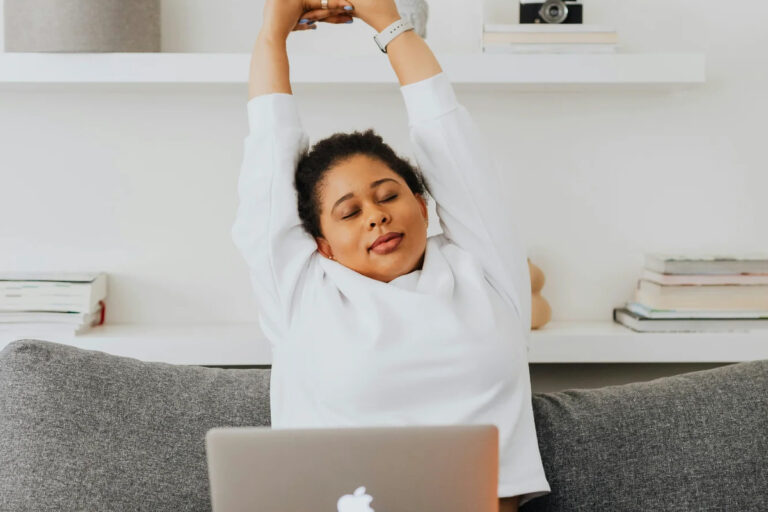
Mobility for Longevity: Move Well to Age Well
I used to think getting older meant accepting stiffness as inevitable. You know the feeling—reaching for something on a high shelf and your shoulder protests. Bending down to tie your shoes and hearing your back complain. Sitting at your desk all day and standing up like you’ve aged ten years in eight hours.
But here’s what I’ve learned: aging doesn’t have to mean losing the ability to move freely.
The Movement We’re Missing
Most of us spend our days in what I call “the sitting triangle”—desk chair to car seat to couch. We’re not just sedentary; we’re stuck in the same positions for hours on end. Our bodies adapt to what we ask of them, and right now, we’re asking them to be excellent at sitting still.
The result? We’re losing our mobility decades earlier than we should.
I noticed it in myself around age 45. Getting out of bed took longer. My neck was constantly tight. I couldn’t sit cross-legged on the floor without discomfort. And I was supposed to be in my “prime.”
Research backs this up. Nearly a quarter of American adults report no physical activity outside their regular job. We’re not just inactive—we’re immobile. And the consequences compound over time.
What Mobility Really Means
When I started researching mobility for longevity, I discovered it’s not about becoming a contortionist or running marathons. It’s simpler and more profound than that.
Mobility is the ability to move your joints freely through their full range of motion with control and strength.
It’s being able to:
- Reach overhead to grab something without wincing
- Squat down to play with your kids or grandkids
- Turn your head fully to check your blind spot while driving
- Get up from the floor easily (a surprisingly strong predictor of longevity)
- Move without thinking about what might hurt
These aren’t athletic achievements. They’re basic human movements we’re designed to do. But when we don’t use these ranges of motion regularly, we lose them.
The Longevity Connection
Here’s where it gets interesting. Multiple studies have shown that simple mobility markers can predict how long and how well we’ll live.
One particularly striking study found that people who could sit on the floor and stand back up without using their hands (a basic mobility test) had significantly lower mortality rates over the following years. Not because the test itself was magical, but because it revealed their ability to control their body through space—a fundamental aspect of healthy aging.
Poor mobility doesn’t just make you stiff. It creates a cascade of problems:
Physical consequences: When you can’t move well, you move less. You avoid activities that might be uncomfortable. Your world literally gets smaller. This leads to muscle loss, joint problems, and increased injury risk.
Mental health impact: Limited mobility is strongly linked to increased rates of depression and anxiety. When your physical world shrinks, it affects your psychological state. Regular movement, on the other hand, reduces poor mental health days by over 40%.
Economic burden: By 2030, physical inactivity is projected to contribute to nearly 500 million new cases of preventable diseases globally, costing an estimated $27 billion annually.
But here’s the hopeful part: mobility responds quickly to attention. Unlike many aspects of aging that feel beyond our control, this one is remarkably responsive to consistent, gentle practice.
My Mobility Wake-Up Call
My turning point came during a weekend hiking trip. Nothing extreme—just a few miles on moderate terrain. But I spent the next three days hobbling around, my lower back seizing up every time I stood.
I was in my thirties, and a gentle hike had wrecked me.
That’s when I realized my body wasn’t the problem—my lifestyle was. I hadn’t prepared my body for anything beyond sitting and walking on flat surfaces. I had become what researchers call “sedentary mobile”—capable of basic walking, but unable to handle natural human movements like navigating uneven ground.
I started small. Really small. Five minutes of gentle stretches in the morning. A few simple movements during my lunch break. Nothing that felt like a workout, just consistent attention to moving my joints through their full ranges.
Within weeks, I noticed changes. Not dramatic transformations, but meaningful improvements. Getting out of bed was easier. My chronic neck tension eased. I could sit on the floor comfortably for the first time in years.
Six months later, I returned to that same hiking trail. This time, I felt strong and capable. My body did what I asked it to without complaint.
Building Your Mobility Practice
The beauty of mobility work is its accessibility. You don’t need equipment, a gym membership, or hours of free time. You just need a few minutes and a willingness to move mindfully.
Start where you are: Your body’s current state is your starting point, not a reflection of your worth. Can’t touch your toes? That’s just information. Feeling stiff when you wake up? That’s your baseline.
Focus on daily movements: The most valuable mobility work addresses the movements you actually need in life. If you sit at a desk, prioritize hip flexibility and thoracic (upper back) mobility. If you’re on your feet all day, focus on ankle mobility and hip strength.
Make it routine-based: Rather than thinking about mobility as exercise, think about it as daily maintenance. Like brushing your teeth, it’s something you do consistently because it prevents problems.
Embrace the small wins: Notice when you can reach a little farther or move with less discomfort. These incremental improvements are how sustainable change happens.
What 10 Minutes Can Do
I’ve become a believer in the power of brief, consistent practice. Not because I’m disciplined, but because I’m realistic. I know that if something requires significant time or effort, I won’t maintain it when life gets busy.
Ten minutes of mobility work, done consistently, creates remarkable changes:
Week one: You’ll likely notice reduced stiffness, particularly in the morning or after sitting for long periods.
Month one: Movements that felt restricted begin to open up. You might notice better posture or less chronic tension.
Month three: Friends or family might comment that you move differently—more fluidly, with more confidence. You’re rediscovering ranges of motion you’d forgotten you had.
Six months: You move through your day with greater ease. Activities that once caused discomfort become comfortable. You start saying yes to physical activities you’d been avoiding.
One year: Mobility becomes part of who you are. You move well, and you expect to continue moving well as you age.
The Movements That Matter
While everyone’s mobility needs are unique, certain movement patterns benefit almost everyone:
Hip mobility: Your hips are designed for incredible range of motion. Modern sitting culture has robbed most of us of this. Simple hip circles, gentle lunges, and exercises that move your legs through different planes can restore what’s been lost.
Thoracic spine rotation: Your upper back should rotate easily, allowing you to look behind you or reach across your body without strain. Most desk workers have lost much of this rotation, leading to neck pain and shoulder problems.
Ankle flexibility: Healthy ankles are crucial for everything from walking on uneven ground to squatting down. If your ankles are stiff, your knees and hips compensate, leading to problems up the chain.
Shoulder mobility: Your shoulders should move freely in all directions—overhead, behind you, across your body. When they don’t, daily activities become uncomfortable, and you start moving in compensatory patterns that create additional problems.
The good news? None of these require advanced flexibility or strength. They just need regular, gentle attention.
The EaseUp app offers guided mobility routines designed for busy people who want to maintain and improve their movement. From quick desk breaks to targeted relief for specific areas, each routine takes just 5-10 minutes and requires no equipment. Whether you’re addressing desk-related stiffness or preparing your body for a more active future, consistent mobility practice can help you move better and age well.
Photo by thevibrantmachine